

















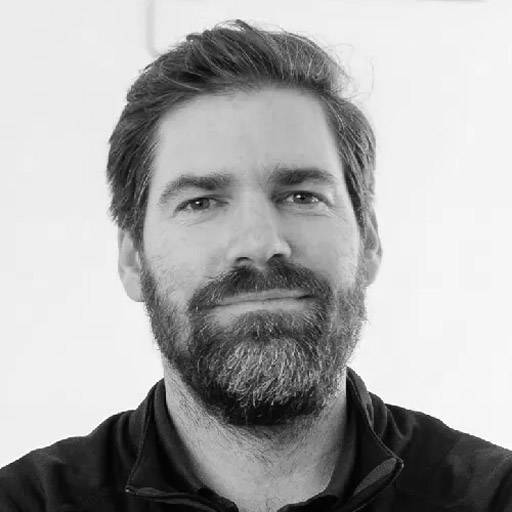
Dr. Florent Poux is a 3D spatial AI specialist, educator, and founder of the 3D Geodata Academy. Holder of an award-winning PhD in 3D Spatial Sciences, he has spent fifteen years moving the field from field surveys to production grade spatial AI, publishing 50+ peer reviewed papers and the O’Reilly book 3D Data Science with Python (15,000+ readers, 4.9/5).
He has trained more than 10,000 professionals across 500+ companies, advised major industry players, and built a structured curriculum for engineers and entrepreneurs that want to push 3D AI Systems. His current research and teaching focus on agentic 3D pipelines: capture, semantic segmentation, reasoning, and autonomous decisioning across point clouds, meshes, and BIM. He teaches judgment, not syntax, and ships systems that turn 3D data into decisions.
Your point clouds are the most expensive untapped asset in your firm. Smart point clouds start to fix that, but only at the geometry layer, and AEC clients have never paid for geometry alone. To turn a scan into a billable deliverable, you need a 3D Spatial AI cognition stack: dual-frame semantics that reason at both the object level and the scene level, plus the layers geometry cannot represent on its own (relationships, topology, physics, materials), with agents on top that query, modify, and generate the artefacts your clients actually buy. In twenty minutes I will show you that stack live on a laptop with Open-Source Tech and Smart Systems such as Neurones 3D, no cloud, to trace the path that turns AEC professionals into 3D Spatial AI Architects.
Point clouds and models derived by photogrammetry are dumb. This panel will look at how AI is increasingly being applied to point clouds and images to deliver intelligent models, and discuss the latest in SLAM and reality capture.
Chair
Robert Klashka // EvrBilt
Panelists
– Irene Radcliffe // Faro
– Mike Deacon // Autodesk
– Florent Poux