NXT BLD 2026

Conference program
Queen Elizabeth II Centre, London
13 - 14 May 2026

Program subject to change
Day 1
NXT BLD
13 May
Day 2
NXT DEV
14 May

MAIN STAGE
(Fleming - 3rd Floor)

Morning THEME: Architecture

9:20am - 9:30am
Welcome to 10 years of NXT BLD

9:30am - 9:40am
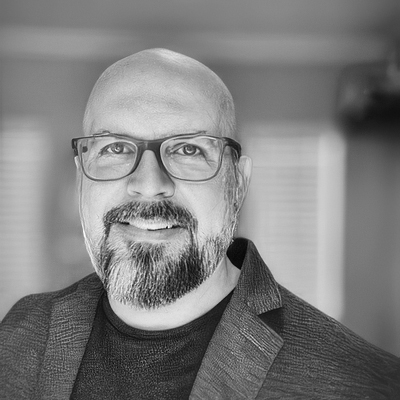
Jenni Ramsay
Join Jenni Ramsay for a special announcement from Lenovo

9:40am - 10:10am
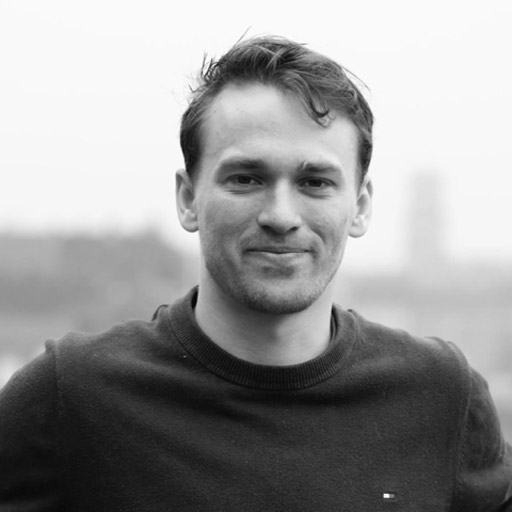
Carlos Bañón
How we communicate with AI is evolving fast: from prompts and references to agents working alongside us. Each new interface opens new ways of designing, introducing new methods, new fluencies, and more natural forms of interaction. A new language of design is emerging.

This talk explores how we are redesigning the process of design itself without losing what has always defined it: intent, agency, and authorship. Multimodal, multi-agentic AI can dramatically expand our capabilities. As these systems become more autonomous, an important question arises: how can this evolution strengthen our agency as designers, and not compromise it?
10:10am - 10:40am
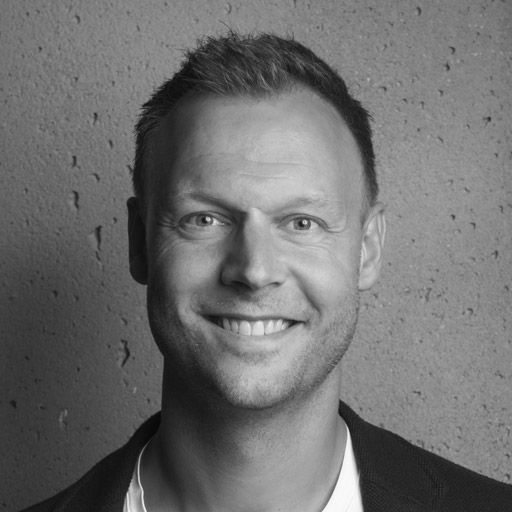
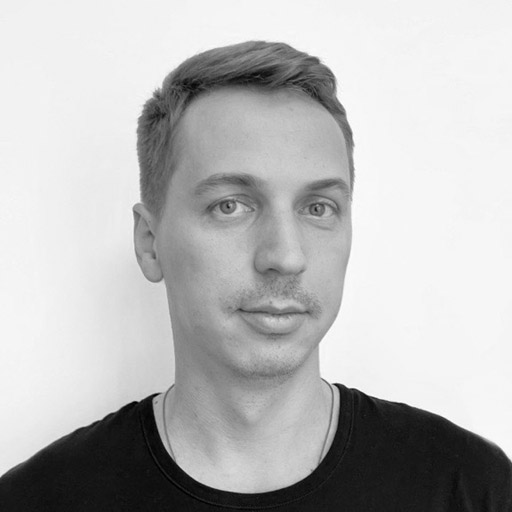
Alain Waha
AI has monopolised many conversations since NXT BLD 2025. Yet, are we still living in a world of Hype, or have we moved to implementation and outcomes?

The last 12 months have brought a rapid rise of agents, moving from copilots to autonomous systems; the growing imprtance of World Models, and the emergence of the “Intelligence Capital” as a new model for the firm.

Waha will digest those and share how these are being woven into the reality of a global practice; and how it embraces the opportunity, not to simply do existing work faster, but to create better built enviroments and better outcomes for our clients.
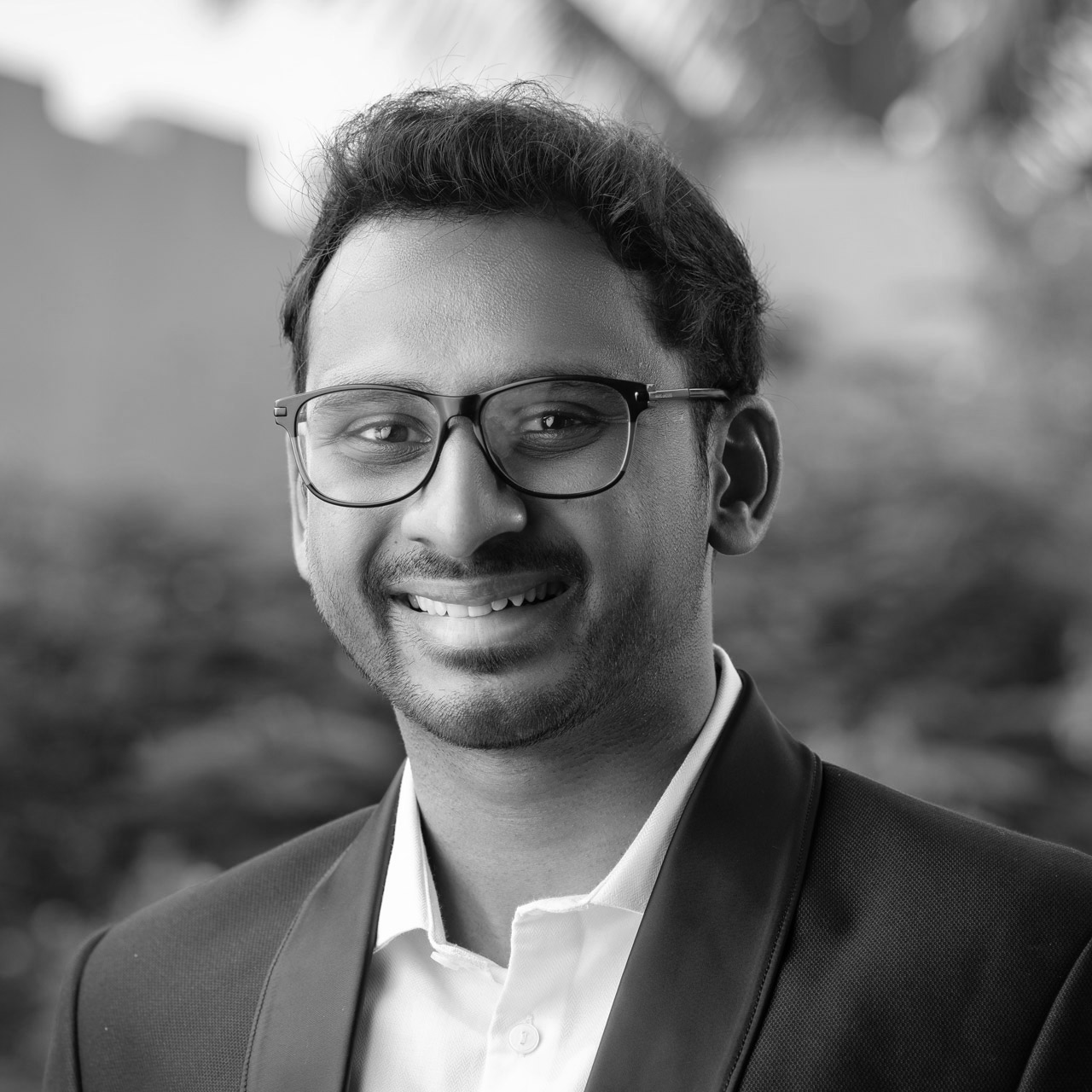
10:40am - 11:00am
Julien Moutte
The future of infrastructure will not be built by a single entity; it will be designed by a global community of developers and innovators working together. In this session, Bentley Systems’ CTO, Julien Moutte, will share Bentley’s vision for an open, extensible, and developer-friendly ecosystem—a future where platforms, APIs, and collaboration accelerate the next generation of infrastructure solutions. He will also showcase how Bentley Systems already empowers a diverse community of developers and partners to dismantle data silos, unleash infrastructure innovation, and co-create a more resilient and interconnected world.
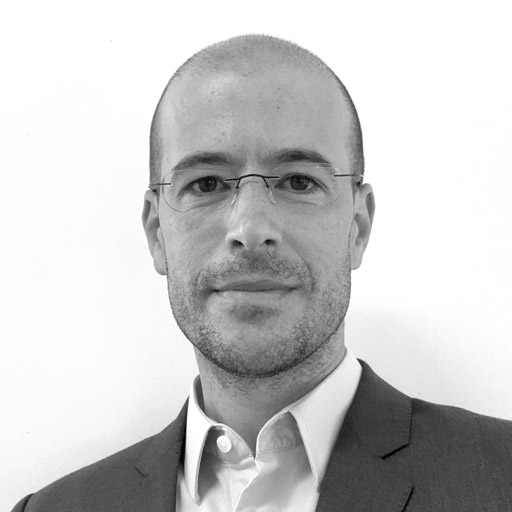
11:00am - 11:30am
Coffee break

11:30am - 11:50am
Robert Gräbert
ARES Neo introduces a cloud-based approach to BIM documentation, combining AI and automation to scale repetitive tasks such as dimensioning, labeling, and quality control. In this session, discover how teams using Autodesk Revit, IFC, and Rhino can streamline workflows, reduce manual effort, and maintain consistent, high-quality BIM drawings across large projects.

11:50am - 12:20pm
Greg Schleusner
What started as a vague idea of how we need to make data work better in AEC is taking shape. AI, New efforts, and seasoned technologies starting to come together into something that looks like a whole. The talk will recap the journey but focus on the clear emerging paths for firms in AEC.

12:20pm - 12:40pm
Aaron Perry
What happens when your modelling software stops being a hurdle and starts being an engine? Aaron Perry explores the three pillars of a modern AEC workflow: unrestricted creative modelling, the automation of "nonsense" through integrated AI, and the power of open-platform partnerships.
By combining a world-class browser-based geometry kernel with practical "agentic" AI, Qonic allows you to reclaim your time and your creativity—moving from direct solid modelling in the browser to advanced agentic workflows. This session isn’t about what we might build; it’s about the tools available today to help you automate the mundane and stay agile for the future of digital delivery.
12:40pm - 1:40pm
Lunch break
AFTERNOON THEME: ARCHITECTURE

1:40pm - 2:00pm
Ian Keough
Early-stage building design is still stuck in PDFs, email threads, and rebuilding models. Hypar is changing that. Join us to see how leading firms are moving seamlessly from bubbles to BIM while collaborating across design options, and how the next generation of Hypar’s intelligence will unlock live building design.

2:00pm - 2:20pm
Moritz Rietschel
.

2:20pm - 2:40pm
Carl Christensen
As the architecture industry explores agentic workflows, AI-driven automation, and new approaches to BIM, a keynote from Carl Christensen, Vice President of Forma Design, will focus on what these shifts mean in the context of architectural design. Rather than focusing on tools or interfaces, it will examine how software is evolving to support architects in exploring options, understanding trade-offs, and moving more confidently toward better outcomes from the outset.

A key part of this shift is the move toward more connected workflows across the lifecycle, where insights and decisions made during planning and design can carry forward into construction and beyond. This enables architects to build on prior work while carrying design intent and decisions forward across the lifecycle and operate within real-world constraints such as cost, carbon, and coordination across disciplines without losing context as projects evolve.

The session will also explore how emerging approaches — including automation, real-time feedback, and AI applied within project context — are beginning to reshape how design decisions are made and carried forward. Grounded in real-world workflows, it will highlight what distinguishes approaches that can scale in architectural practice from those that remain experimental, and why connecting workflows, intelligence, and outcomes is critical to unlocking the next phase of BIM.

2:40pm - 3:10pm
Martha Tsigkari
The Ship of Theseus paradox asks whether a ship remains itself when every part has been replaced. The more interesting question for our profession is not whether the ship is the same - it is whether, once you have replaced enough planks, you have learned to build a better one.

3:10pm - 3:30pm
Dimitrie Stefanescu
The design intelligence layer has been two years away for the last decade; promised at every conference and delayed by the same data problems nobody wanted to fix first. But a growing number of firms have given up on waiting and fixed them with the industry’s open data layer. We'll show you what it looks like when model data is accessible, trusted, and something anyone on the team can actually use, and why the feedback loop between design and construction is finally closing.

3:30pm - 3:50pm
Construction projects are more complex, more collaborative, and more cost-constrained than ever, but early design still treats buildability as something that shows up later. Arcol is changing that. This session explores constructible design: a new workflow where architects, owners, builders, and eventually agents work together from the first option, with cost, constraints, feedback, and documentation connected in one live environment. We’ll show how Arcol turns early design into a shared, data-rich process, and why the next generation of agentic tools will not replace designers, but help them scale their expertise, coordinate more decisions, and deliver better outcomes faster.

3:50pm - 4:10pm
Toni Stenström
The global demand for affordable housing presents a significant and rapidly growing
challenge, pushing the boundaries of what traditional construction methods can achieve alone. Addressing this gap requires new approaches that improve scale, speed, and cost efficiency across the entire construction process.
ADMARES addresses this challenge through the industrialization and digitalization of the entire construction process. By applying digital twins, product platform thinking, and industrial manufacturing principles, the company has developed a fully digitalized and productized approach to construction, enabling the delivery of high-quality housing at a scale not achievable through conventional construction methods.
This session will provide a glimpse into how this transformation has been achieved and what it means from the perspectives of design, data, and PLM.
4:10pm - 4:30pm
Coffee break

4:30pm - 4:50pm
Sylwester Pawluk
Discover how Nemetschek is revolutionizing AEC design workflows through a unified platform strategy. Learn about three transformative pillars: AI-powered pre-design and optioneering that shifts critical decisions upstream, collaboration connecting your ecosystem, and intelligent agentic workflows that eliminate repetitive tasks. This session reveals how architects and other design professionals will move from form-making to intent-based design, make better decisions faster, and seamlessly collaborate from first sketch to final delivery – transforming productivity and creative potential.

4:50pm - 5:10pm
Altaf Ganihar
For decades, the cost of changing your mind has been AEC's hidden tax. Owners pay for it in delays, engineers in rework, contractors in RFIs, architects in lost design exploration. Snaptrude goes live: a real project, a real site, a brief, and a fully detailed, editable LOD 300 BIM model in under fifteen minutes. Every layer (massing, program, BIM, drawings) sits on a single connected graph. Every change propagates with provenance. We will run the demo end-to-end and look at what happens to AEC's economics when iteration is free.

5:10pm - 5:30pm
Jonathan Asher
CATIA has a long history of enabling industry transformation. In the emerging era of artificial intelligence, this trend continues with innovative AI solutions for industries.

This talk shines a light on the trajectory of the generative AI technologies inside CATIA as well as their relevant applications in the AEC industries. Far from exhaustive, this is a glimpse of what is possible on the 3DEXPERIENCE Platform.

5:30pm - 5:50pm
Adi Shavit
Architecture is entering the age of agents. SWAPP AI has been producing the construction documents of real buildings, every day, for years, for some of the largest firms. This talk is about what it actually takes to build agents that survive the architect's daily work, the partner's review, and the security team's audit. And what we've learned about the future of architectural production from running it at scale.
5:50pm - 7:00pm
Social

LENOVO STAGE
(Whittle - 3rd Floor)

Morning THEME: CONstruction & engineering


9:40am - 10:10am
Jason Callear
Bruce Bell
Musa Chunge
This session introduces the Technology & Innovation work at Laing O’Rourke and explores how digitalisation, systems thinking and advanced manufacturing are reshaping the way major infrastructure is delivered.

Bruce Bell will set the context by outlining Laing O’Rourke’s approach to productising construction and digitising delivery.

Musa Chunge will present the Digital Bridges programme, demonstrating how design automation and configuration are enabling configurable, rapidly deployable bridge solutions. J

Jason Callear will then showcase how advanced manufacturing is transforming large-scale structural reinforcement through automation, robotics and digital production systems. Together, the session highlights how integrated digital and manufacturing approaches are turning construction into a scalable, repeatable product.

10:10am - 10:30am
AI-led automation has solved design. The hard problem - the fragmented, sequential, risk-multiplying delivery machine that consumes half the value before a building is complete - remains untouched. This talk makes the case for virtual vertical integration: how data, intelligence, and a fundamentally reorganised value chain can finally deliver what every previous wave of construction technology has promised and failed to achieve.

10:30am - 10:50am
Chun Qing Li
How KREODx is moving AEC from representation, coordination and document workflows towards executable, lifecycle-connected delivery intelligence

10:50am - 11:10am
Derek England
Toni Stenström
While automating AEC workflows has proven difficult, modular construction presents a unique advantage. Its vertical integration can alleviate many technological challenges and inefficiencies, by leveraging an integrated design solution. Join us to see how the industrialization of construction, highlighted by Admares' success, dramatically improves efficiency, cuts costs, and speeds up project delivery, pavingthe way for theintegrated and modular future of construction
11:10am - 11:25am
Coffee break

11:25am - 11:50am
Francesco Iorio
Aaron Szymanski
Most AI work in AEC today is focused everywhere except the hardest problem: the detailed 3D reasoning needed to translate engineering intent into fully coordinated, constructible buildings at scale. That's the layer that cuts months of time and millions of dollars from project schedules - and it's what Augmenta is building.

Today, 33 buildings have been designed with Augmenta - including six hyperscale datacenters, and the first AI-designed school in the world, open and occupied. The engine behind those projects is now generalising to full MEP design.

Francesco Iorio and Aaron Szymanski will present what it actually takes to build a foundation model for construction: why LLMs can't do this, the three problems that had to be solved before any of this could ship, and what it will mean for architects, engineers, and the future of the AEC industry.


11:50am - 12:15pm
Andrew Krippner
Davis Muxlow
HVAKR has built an agentic workflow for fundamental HVAC engineering and will demonstrate turning 2D architectural plans into a load model in seconds. If it can be done with "dumb" drawings, it can be done with anything.

12:15pm - 12:35pm
Mark Hirst
As the FIFA World Cup approaches, fans are caught between optimism and anxiety about what lies ahead. AEC firms find themselves in a similar moment with AI. This session explores how AECO organizations are building AI from the ground up, starting close to their data, teams, and tools. Instead of moving straight to cloud‑only models, leading firms are using workstations as the on‑ramp and sandbox for AI development, experimentation, and local inference. Framed through a football analogy, the workstation becomes the training ground where skills are developed and confidence is built before scaling to larger environments. Attendees will gain a practical view of how local AI is shaping innovation in AECO today and how, with the right tactics and tools, firms can deliver a world‑class performance.

12:35pm - 13:00pm
Lucas Epp
Structural feedback during early project stages often does not keep up with massing studies. Generating structural options takes too much time - yet is critical to understanding both cost, carbon, and systems integration in any building. Branch unlocks this by enabling realtime analysis and design of structures in all materials, with a deep understanding of structural systems, manufacturing, and carbon.

Next: more complex geometry, connection design, shop drawings/CNC files

1:00pm - 1:20pm
Richard Parker
An agentic platform to automate engineering calculations and reporting.

"A verified fast-track to the era of agentic engineering."

1:20pm - 2:20pm
Lunch break
AFTERNOON THEME: AI / GEO / CIVILS

2:20pm - 2:40pm
Pamela Nunez Wallgren
Jesper Wallgren
Pamela and Jesper from Finch explore the near future of architectural practice, where AI, automation, and interoperability are no longer emerging concepts, but active collaborators in the design process.

Building on a live workshop with KPF, they reveal how teams can move beyond producing drawings to orchestrating outcomes, unlocking faster iteration, broader exploration, and earlier, more confident decision-making.

The session traces a connected workflow from urban massing to BIM-ready floor plans, demonstrating how hundreds of apartments can be generated, tested, and coordinated in a fraction of the traditional timeframe. Rather than focusing on tools in isolation, the talk highlights how integrated systems enable continuous feedback between design, data, and delivery.

At its core is a shift in authorship: from architect as drafter to architect as curator of systems. By leveraging computation and AI, designers gain greater agency, not less, expanding their ability to navigate complexity, evaluate trade-offs, and shape better outcomes at scale.

2:40pm - 3:00pm
Alfonso Oliva
We are at a turning point where AI is moving from experimentation to practical value across AEC — helping teams design faster, build smarter, and operate assets more efficiently.
What comes next is a new generation of projects where data flows across the full lifecycle, decisions are supported in real time, and every phase becomes more connected and predictable.
The future of AEC will belong to the companies that turn AI into everyday execution.

3:00pm - 3:20pm
Bill Allen
Discover groundbreaking new workflows in Veras and Morphis, powered by the innovative Nano Banana technology. This presentation will showcase how to transform your design process, including 2D to 3D conversion, generatively laying out lights and ductwork, creating compelling axonometric views, and maintaining design persistency from multiple angles. We will also demonstrate how to effortlessly populate your spaces with furniture, revolutionizing the design process with the next generation of AI technology.

3:20pm - 3:40pm
Dr. Florent Poux
Your point clouds are the most expensive untapped asset in your firm. Smart point clouds start to fix that, but only at the geometry layer, and AEC clients have never paid for geometry alone. To turn a scan into a billable deliverable, you need a 3D Spatial AI cognition stack: dual-frame semantics that reason at both the object level and the scene level, plus the layers geometry cannot represent on its own (relationships, topology, physics, materials), with agents on top that query, modify, and generate the artefacts your clients actually buy. In twenty minutes I will show you that stack live on a laptop with Open-Source Tech and Smart Systems such as Neurones 3D, no cloud, to trace the path that turns AEC professionals into 3D Spatial AI Architects.

3:40pm - 4:00pm
Rick Gayle
In today’s rapidly evolving design landscape, the journey from concept to constructed reality is being redefined. Building Smarter explores how cutting-edge technologies are transforming architecture and BIM workflows, enabling teams to move faster, collaborate more effectively, and deliver greater impact. From AI-assisted design and real-time visualization to cloud-based collaboration and advanced computing, this session highlights the tools and strategies reshaping the industry. Through real-world examples and practical insights, attendees will discover how to unlock new levels of creativity, efficiency, and innovation across the entire project lifecycle.
4:00pm - 4:30pm
Coffee break

4:30pm - 4:50pm
Marty Rozmanith
Today Skema is a full design and delivery platform. See how Skema’s analytic model and bi-directional Revit syncing handle complex buildings and give firms a better solution for harnessing design intelligence and knowledge capture. We’ll walk through several complex examples and show you the detailed data and engineered systems.

4:50pm - 5:10pm
GIS is revolutionizing architecture, planning, and urban design by providing context, enhancing collaboration through powerful visualization tools, and informing stakeholders to drive better decisions. As the field evolves, integrating GIS will become increasingly vital in shaping innovative, data-driven, and sustainable design solutions for the built environment.

5:10pm - 5:30pm
Alexander Groth
Semion Sobolevski
Every project starts with the same hidden tax: a day lost hunting down site data before design work can even begin.
In this talk, Cityweft co-founder [Name] argues that geospatial data is the critical infrastructure AEC has been treating as an afterthought — and shows what workflows look like when that's finally fixed. Accurate, globally-covering site context, already inside the tools you use, ready before the first model opens.
Less time fixing data. More time designing.

5:30pm - 5:50pm
Andreas Bjune Kjølseth
Infrastructure planning is too complex, time-critical, and important to rely on traditional, manual workflows alone. Next-generation planning software powered by generative design enables engineers and planners to explore thousands of design alternatives automatically—revealing better outcomes, faster, and with far stronger decision support.
This session shows how generative design works in practice, beyond theory and hype. Through real customer cases and specific infrastructure projects, we demonstrate how teams have used the technology to reduce planning time, lower costs, and evaluate trade-offs related to constructability, environmental impact, and performance at an early stage.
5:50pm - 7:00pm
Social
Copyright © 2025 X3D Media | All rights reserved
AEC website: www.aecmag.com
Web production: Kosinus