

















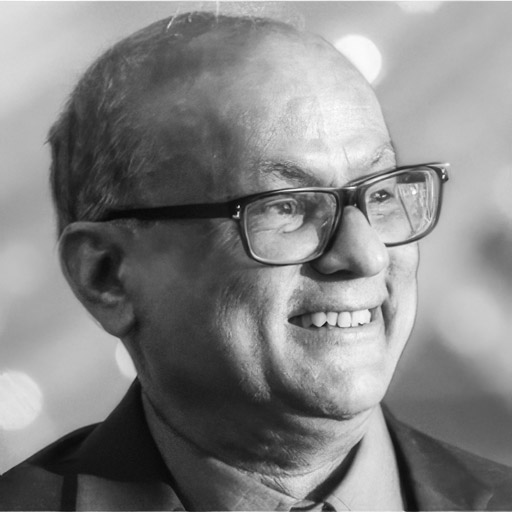
Dr. Prasanta Bose holds a master’s degree in computer science from the University of Massachusetts and a PhD from the University of Southern California, with a focus on artificial intelligence and machine learning. Over a 40-year career, Dr. Bose has built and deployed advanced AI and decision systems across some of the most demanding, mission-critical environments, including the F-35 fighter jet.
At Lockheed Martin’s Advanced Technology Center, he spent more than a decade leading high-impact programs in autonomous systems and advanced AI software, contributing to cutting-edge initiatives for DARPA and NASA. His work earned multiple company-wide technical excellence awards, and he recently received a Lifetime Achievement Award from his alma mater.
Dr. Bose later served as Senior Director of Engineering and Advanced Analytics at Starbucks Technology (2015–2020), where he led the development and deployment of a large-scale AI-powered IoT platform that delivered over $400 million annually in operational savings. Subsequently, he co-founded and successfully exited two technology startups.
He is widely recognized for his work in agentic systems, inference engines, and neurosymbolic AI, and for bridging deep theoretical innovation with real-world enterprise deployment at scale. He is an expert in the application of advanced AI to the built environment and in systems-of-systems design.
Despite the surge of “AI-powered” tools across AEC, the industry remains at the very beginning of its adoption curve. Most solutions are bolting AI onto workflows and platforms never designed for it—resulting in systems that cannot reason, scale, or withstand real project complexity.
This session takes a clear position: AI must be native to the design and decision process itself—not added after the fact.
Drawing on real enterprise deployments, Michael Jansen and Dr. Prasanta Bose will explore how AI-native systems move beyond automation into true decision intelligence—reasoning across cost, carbon, energy, compliance, constructability, et al., to guide better outcomes, not just faster outputs.
The discussion will challenge prevailing narratives around generative design and “AI everywhere”, offering a practical framework for understanding what works, what doesn’t, and what AEC firms should be preparing for over the next 3–5 years.
This is not about replacing architects and engineers. It’s about finally delivering the intelligence layer the industry has been missing.
(with Michael Jansen)