NXT BLD 2026

Conference program
Queen Elizabeth II Centre, London
13 - 14 May 2026

Program subject to change
Day 1
NXT BLD
13 May
Day 2
NXT DEV
14 May

MAIN STAGE
(Fleming)
(3rd Floor)

9:20am - 9:30am
Introduction to NXT DEV

9:30am - 10:10am
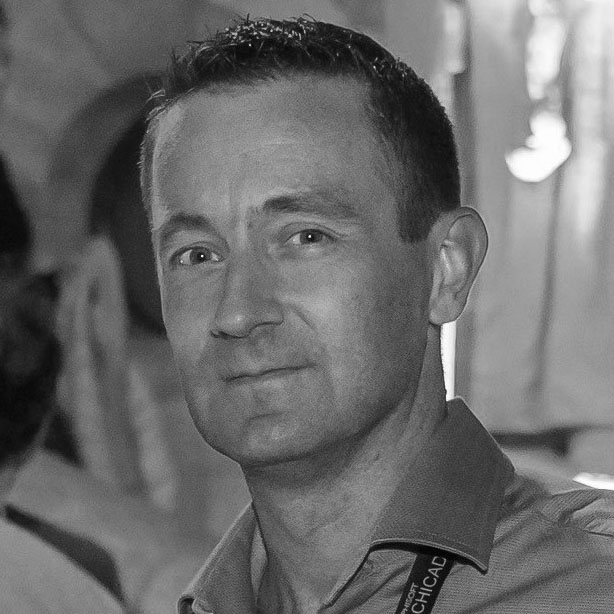
Jay Vleeschhouwer
An analysis of the AEC software industry

10:10am - 10:40am
Dale Sinclair (grayscale)
Demand for construction is predicted to double globally by 2040. Regardless of whether projects are adaptions of existing buildings or new build, current workflow cannot meet the scale of demand nor the need for faster delivery. Simply, single constructed projects cannot deliver the future. WSP has been pioneering its kit-of-parts (KoP) approach for five years and now has more than twenty case studies. Unlike KoP geared to construction, WSP’s approach looks at shifting towards program approaches that go well beyond current norms moving towards program-ready product that is procured on project one and made ready and reusable for project two onwards. This talk unpacks the learning from recent case studies and sets out a compelling vision for the future.

10:40am - 11:00am
After scaling Enscape to 400,000+ users and a $200M exit, Moritz Luck spent two years on the other side of the table — writing checks into AEC. Hundreds of decks, hundreds of demos, hundreds of versions of the same pitch. And one folder of questions no one in the room could answer, including him.
Why does every founder claim a different angle, but they all look the same on slide 7? That's question one. Nine more follow.
In this talk, Moritz walks through what he saw and what he doubts — and hints at why he's stepping back in. Expect a direct take on where the real opportunity sits, and how to tell signal from noise in a market awash in capital. Find him after the talk — and at the booth.
11:00am - 11:30am
Coffee break

11:30am - 12:00pm
Antonio González Viegas
You feel it every day. The export that loses half the data. The plugin that fixes one thing and breaks another. The meeting that exists because two tools refuse to agree. The renewal for features nobody uses. The six-figure invoice. The model that works perfectly where it was created, and nowhere else.
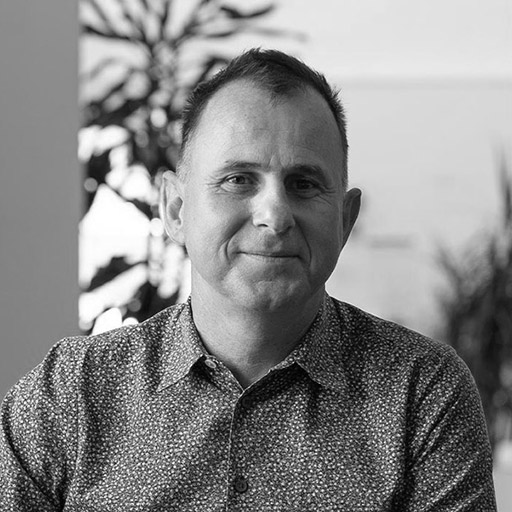
It's not your fault. It's the business model behind the tools. And it's finally starting to crack.

We’ve built an alternative. We will show it in public for the first time.

12:00pm - 12:30pm
Martyn Day
The impact of Agentic AI, BIM 2.0 and autodrawings on workflows

12:30pm - 1:10pm
Virginia Senf
David Shepherd
Nick Cameron
Frederic Gal
Stefan Suche
Diego Padilla Philipps
Host
Virginia Senf // Speckle

Panelists
- David Shepherd // Houses of Parliament Restoration and Renewal
- Nick Cameron // Perkins+Will
- Frederic Gal // Bouygues UK
- Stefan Suche // Goldbeck
- Diego Padilla-Philipps // WSP

As AI promises to upend the AEC industry, the organizations pulling ahead share one thing in common: they got serious about their data first. This panel brings together leaders from across the built lifecycle to explore what outcomes better data is unlocking and the thorny questions every AEC firm is wrestling with right now. Who owns the data? Who can actually get value from it? How do you turn it into new services for clients? And what does the competitive landscape look like for firms that move now versus firms that wait?
1:10pm - 2:10pm
Lunch break

2:10pm - 2:40pm
Stanislas Chaillou
As AEC software converges with the web and AI, our industry is beginning to confront a widening gap between two design and technical cultures: that of ordinary buildings, and that of landmarks.
For decades, a single class of software has been expected to serve both. Yet the everyday buildings that make up 90% of our cities have become an underserved, but no less fascinating, majority.
By addressing ordinary buildings — their specific design culture, construction practices, and forms of complexity — we believe AEC software is reaching a turning point. A new generation of online, lighter, AI-ready tools is beginning to challenge the “one platform fits all” model on which much of our industry has been built. In this talk, we share the realisations, technical challenges, and opportunities we encountered while building Rayon for the 90%.

2:30pm - 2:50pm
Alfonso Oliva
Artificial intelligence is rapidly transforming the Architecture, Engineering, and Construction industry, moving from isolated tools to integrated workflows that connect design, simulation, construction, and operations. In this session,

Alfonso Oliva from NVIDIA will explore how technologies across the NVIDIA software stack — including CUDA, NeMo, Cosmos, Omniverse, OpenUSD, and AI agents — are enabling real-world AEC workflows powered by accelerated computing and AI. The session will show how AI is helping AEC teams streamline workflows, improve collaboration across software ecosystems, and make faster, more informed decisions across the project lifecycle.

2:50pm - 3:20pm
Marty Rozmanith
Where did BIM go wrong? BIM wasn’t built for agents—and it shows. If we were starting from scratch today, what first principles would go into a BIM solution? Does a Revit MCP server even make sense? Or a wholesale Revit replacement? In this session, Rozmanith lays out a first-principles blueprint for agentic BIM. Agree or disagree, you’ll leave with a clearer view of what’s coming—and what to do about it.

3:20pm - 3:50pm
May Winfield
May Winfield brings another practical review of some of the latest key issues arising from digitisation and data use – that you may be sleepwalking into. Are you using a number of AI tools and software programmes to develop, check and manage your data? What if one of them makes an error? Are you at fault for the resulting cost and delay? Are there ways to practically manage the risks? What if you want to change tool/software providers… can you and what is the cost? And the age old chestnut, do you own your data? Do you know what terms that tool and software providers can hold you to on all of these?
3:50pm - 4:20pm
Coffee break

4:20pm - 4:40pm
Naoki Kitamura
Generative AI can sketch the form — but without organisational wisdom, it designs in a vacuum. This session explores what happens when tacit knowledge, constraints, and institutional expertise are embedded directly into the AI workflow: the system stops acting like a junior assistant and starts performing like a trusted expert who already knows your standards, your culture, and your intent. Through guardrails and continuous feedback loops, AI agents become capable collaborators within real workflows — acting with context, following intent, and helping organisations turn accumulated knowledge into repeatable execution.

4:40pm - 5:20pm
Alain Waha
Altaf Ganihar
Dov Amihod
Julien Moutte
This panel will explore how AI agents will be deployed across design workflows providing multiple benefits, so long as there are checks and balances.

Chair
Alain Waha // Buro Happold

Panelists
- Altaf Ganihar // Snaptrude
- Dov Amihod // Datagrid (A Procore Company)
- Julien Moutte // Bentley Systems

LENOVO STAGE
(Whittle)
(3rd Floor)


9:40am - 10:00am
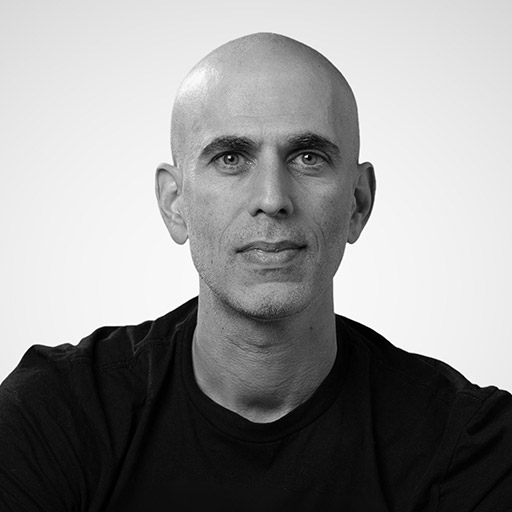
Carlos Bañón
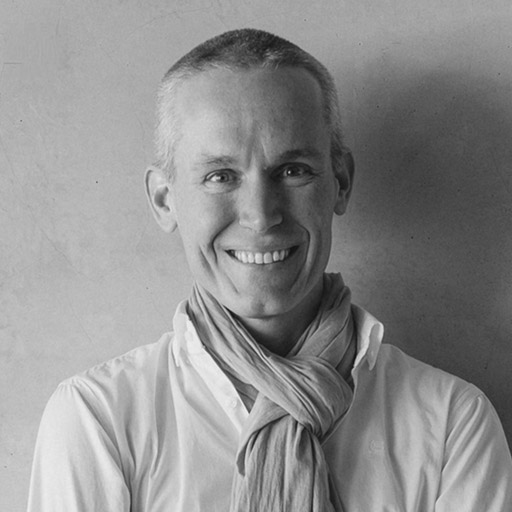
Yiping Goh
AI can generate fast, but too often it produces generic results without clear intent, authorship, or firm identity. FORMAS.AI proposes a different workflow: a design canvas where architects can express, explore, control, and create with AI while keeping agency at the center.

Through a live demo, Carlos Bañón and Yiping Goh will show how FORMAS.AI supports architectural thinking across sketch, geometry, references, materials, constraints, lighting, spatial relationships, and text.

Not just faster workflows. More intentional ones. Form follows you.
10:00am - 10:20am
Pierre Saunal
Jaime Ingram
Pierre Saunal & Jaime Ingram

To reach Net Zero by 2050, we must solve the as-built data bottleneck. With 80% of our future building stock already standing, the next 25 years require an exponential increase in retrofit speed. This session explores how SnapTwin is addressing this challenge by automating the Scan-to-IFC pipeline. We will demonstrate how high-speed automation and interoperability serve as a bridge between People, Technology and the Golden Thread, embedding digital twins into the daily workflows of the entire AECO value chain.

10:20am - 10:40am
Axel Wohlin
Arkyv is the AI workspace for architects spanning collaborative AI design ideation, knowledge layers for projects & integrations to Rhino & Revit that allows anyone to create scripts, reuse them and share them.

10:40am - 11:00am
Michael Jansen
Dr. Prasanta Bose
Why AI Is Failing in AEC — and What Comes Next

Despite the surge of “AI-powered” tools across AEC, the industry remains at the very beginning of its adoption curve. Most solutions are bolting AI onto workflows and platforms never designed for it—resulting in systems that cannot reason, scale, or withstand real project complexity.
This session takes a clear position: AI must be native to the design and decision process itself—not added after the fact.
Drawing on real enterprise deployments, Michael Jansen and Dr. Prasanta Bose will explore how AI-native systems move beyond automation into true decision intelligence—reasoning across cost, carbon, energy, compliance, constructability, et al., to guide better outcomes, not just faster outputs.
The discussion will challenge prevailing narratives around generative design and “AI everywhere,” offering a practical framework for understanding what works, what doesn’t, and what AEC firms should be preparing for over the next 3–5 years.
This is not about replacing architects and engineers. It’s about finally delivering the intelligence layer the industry has been missing.
11:00am - 11:30am
Coffee break

11:30am - 11:50am
Alex Coulombe
Yu-Jun Yeh
Where Are You in the Cycle?

Most architecture studios rebuild similar experiences from scratch, project after project. Alex Coulombe (Founder/CEO) and Jun Yeh (Lead Developer) of Agile Lens trace how their team turned a one-off 2013 sightline simulator into a new tool: Blueprint Immersive, then used the same playbook three more times. The result is a four-rung product ladder: Floor Tour for early-stage scale, Blueprint Immersive for in-space iteration, Hyperreal Estate for stakeholder review, and Holodeck Anywhere for sales-ready experiences. The talk pulls back the curtain on how a small studio determines which workflows are worth productizing (and when), where XR earns its place at each stage of design, and how AI is starting to compress the climb. For studios and design firms that keep solving the same problem twice.

11:50am - 12:10pm
George Guida
Architecture is at an inflection point. AI is collapsing the gap between idea and execution, putting thinking back at the center of practice. xFigura, the AI-native intelligence layer for concept design, is already used by thousands of architects at Zaha Hadid Architects, BIG, KPF, OMA, and many other leading practices. This talk unpacks how AI is giving architects back authorship, speed, and authority across the full arc from idea to building.

12:10pm - 12:30pm
Christopher Diggins
The AEC industry has quietly accepted a difficult bargain: hand BIM data to cloud platforms, then pay to store it, move it, access it, process it, and wait on rate-limited APIs when it is needed at scale. This model only works when the underlying systems are optimized for bulk access, analytics, automation, and AI. Too often, they are not. This talk explores the hidden costs of vendor-controlled BIM data access and presents a practical alternative: customer-controlled data infrastructure built on open schemas, efficient columnar storage, and fast query engines. We will show how BIM Open Schema and BIM Lakehouse can make building data faster to access, easier to integrate, cheaper to operate, and more useful across applications, portfolios, and AI workflows.

12:30pm - 1:10pm
Richard Harpham
Amar Hanspal
Richard Harpham +
Amar Hanspal // Motif
Hugh McEvoy // Trimble

We are nearing the peak of ’Named User Licence’ models used by software companies to charge for their software.

In the future AI automation will mean we need less seats of BIM dedicated to documentation. AI will also mean customers can write their own design tools.

The industry is quickly trying to figure out how to charge customers - tokens, ‘outcomes’ and even taking a % fee of projects.
1:10pm - 2:10pm
Lunch break

2:10pm - 2:50pm
Martyn Day
Richard Harpham
Carl Christensen
Altaf Ganihar
Paul O'Carroll
Ian Keough
Aaron Perry
How close are we to having viable alternatives to BIM 1.0? Snaptrude, Motif, Arcol, Hypar, Qonic and Autodesk discuss BIM 2.0 and how the next 18 months to 2 years will be essential to having alternative modelling tools powered by AI.

Chairs
Martyn Day // AEC Magazine & NXT BLD
Richard Harpham

Panelists
Carl Christensen // Autodesk
Altaf Ganihar // Snaptrude
Paul O'Carroll // Arcol
Ian Keough // Hypar
TBC // Motif
Aaron Perry // Qonic

3:00pm - 3:20pm
Andrea Matta
Autodrawing is the first real break in BIM workflows, enabling firms to automate documentation and reduce manual effort at scale. But current approaches are limited to batching predefined actions, leaving the core problem unsolved.

Architecture is not a sequence of commands, but a set of workflows shaped by intent, context, and decisions. This talk explores the shift from interaction-based tools to execution-based systems, where design intent is translated into adaptive workflows operating directly on BIM models.

Using Ideatura as a case study, we look at how an AI execution layer can move beyond drawing automation toward systems that understand and execute architectural work.

3:20pm - 3:40pm
Bill Allen
This presentation explores how agentic AI is poised to automate the creation of construction drawings. We will delve into the automation of view creation, sheet creation, dimensioning, tagging, and sheet packing using both LLMs as well as agentic AI. Furthermore, we will introduce a machine learning component that continuously learns and adapts from your firm’s existing drawing standards, ensuring that the automated output is tailored to your unique needs.
3:40pm - 4:10pm
Coffee break

4:10pm - 4:50pm
Martyn Day
Adi Shavit
Robert Gräbert
Andrea Matta
Bill Allen
One of the first areas to be hit by automation will be documentation.

Since the popularity of BIM has led to the mushrooming of documentation, a raft of tools are coming to try and drive automated drawings.

Our panel will discuss the current latest technology, how this can be deployed and how much money and time can be saved.

Chair
Martyn Day // AEC Magazine & NXT BLD

Panelists
Adi Shavit / SWAPP
Robert Graebert // Graebert
Andrea Matta // Ideatura
Bill Allen // Chaos

4:50pm - 5:30pm
Robert Klaschka
Irene Radcliffe
Mike Deacon
Dr. Florent Poux
Point clouds and models derived by photogrammetry are dumb. This panel will look at how AI is increasingly being applied to point clouds and images to deliver intelligent models, and discuss the latest in SLAM and reality capture.

Chair
Robert Klashka // EvrBilt

Panelists
- Irene Radcliffe // Faro
- Mike Deacon // Autodesk
- Florent Poux

Software development
(Sponsored by NVIDIA)
(Gielgud - 2nd Floor)

9:40am - 5:20pm
Attention architects and engineers. You are all software developers now!

AI + Open SDKs + APIs = BIM applications.

A special track dedicated to learning more about SDKs, enabling you to get usable applications from your AI coding experiments.

9:40am - 10:00am
The world feels broken and our leaders seem to have no answers. Their reflex (and ours) is to hand control to machines. It happened with the financial system in 2008. It happened with social media, where basic algorithms gave us echo chambers and served shareholders, not citizens. Now AI arrives with the same promise and bigger stakes: hallucinated answers, outsourced thinking, contested authorship, and a productivity arms race dressed up as freedom. For an industry that designs places for people, the tools we use matter. This talk argues for questioning the methodology, knowing how our tools work, and remembering the order: people, ideas, machines.

10:00am - 10:30am
A glimpse inside software development at Buro Happold

10:30am - 11:00am
Diyan Rashevski
Why does open source matter for the AEC industry? And what changes when AI enters the picture? With xeokit SDK, bringing 3D building models and data to the web has become easier and more reliable than ever — under your control, and tailored to your specific needs. As a highlight, we will introduce xeokit Data Engine — our new step toward bridging open-source innovation and closed industry ecosystems — making data easier to access, govern, and use.
11:00am - 11:30am
Coffee break

11:30am - 11:50am
Nick Cameron
Perkins&Will's Director of Digital Practice will explore how AI-assisted coding is expanding who can participate in toolmaking within design firms

11:50am - 12:20pm
Peter Madlener
In this session, VIKTOR will demonstrate how engineering tasks and processes can be automated in minutes by creating agentic workflows that can plan, decide, and act with minimal supervision. Live on stage, we will build engineering apps and connect these directly to external tools like Autodesk Construction Cloud, showing in real time how AI agents can orchestrate multi-step workflows and iterate toward optimal outcomes. You will see how engineering logic can become reusable, how data and models can connect seamlessly across platforms, and how this approach can drive major gains in standardization, speed, and productivity at enterprise scale.

12:20pm - 12:40pm
A glimpse inside software development at ZHA

12:40pm - 1:10pm
Antonio González Viegas
.
1:10pm - 2:10pm
Lunch break

2:10pm - 2:30pm
Greg Schleusner
A glimpse inside software development at HOK

2:30pm - 3:00pm
Igor Tsinman
Construction project information is often spread across disconnected applications at suppliers and subcontractors, making it hard to align design, cost, and execution data in one place. The result is miscommunication, errors, rework, and cost or schedule overruns, especially when teams need answers quickly. This session highlights an AI-powered, MCP-first approach that connects systems in real time to provide integrated, permissions-aware access to project information. We’ll walk through a working example integrating Autodesk Platform Services with Procore, showing how conversational AI can deliver fast, context-aware answers, helping teams make decisions faster and reducing coordination friction across the project lifecycle.

3:00pm - 3:20pm
A glimpse inside software development at Heatherwick Studio

3:20pm - 3:40pm
Richard Parker
.
3:40pm - 4:10pm
Coffee break

4:10pm - 4:40pm
A glimpse inside software development at Foster + Partners

4:40pm - 5:00pm
Christopher Diggins
AI is making it easier than ever for AEC firms to create custom tools, scripts, and applications, but generated software is only as portable and capable as the libraries it builds on. Too often, AEC development starts inside proprietary host application SDKs, creating hidden constraints around licensing, deployment, reuse, and long-term maintainability. This talk introduces the open Ara 3D SDK: a portable, dependency-free C# foundation for building geometry, data, visualization, and workflow tools that are not locked to a single platform. We will demonstrate how Ara 3D Studio can be used as a practical environment for developing and testing workflows that can later run in standalone tools, internal applications, or other 3D software environments.

5:00pm - 5:20pm
Four prototypes against Martyn Day's agentic BIM thesis, built on ThatOpen. Geometry as code held up. Declarative rules became legible to LLMs. Live model state confirmed what BIM 2.0 is already shipping. Multi-agent broke in interesting ways. A short account of what the building exercise made concrete — and the four practical takeaways for anyone trying to build in this space.
Copyright © 2025 X3D Media | All rights reserved
AEC website: www.aecmag.com
Web production: Kosinus