

















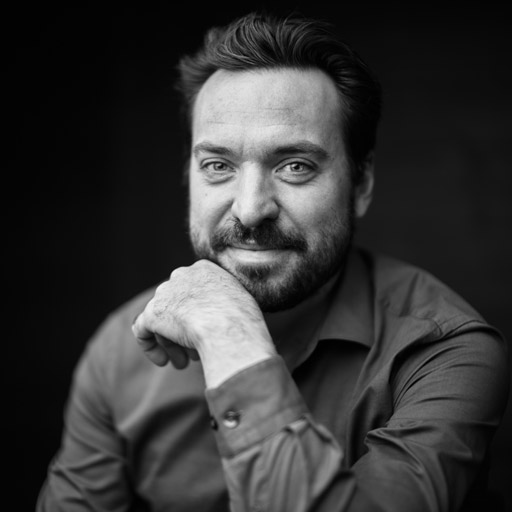
Carl is passionate about driving digital innovation, product development and creating empowered organization.
Carl has a goal of deeply improving the way cities are built all over the world which led him to co-found Spacemaker AI, a cloud-based artificial intelligence (AI) platform that helps urban designers and architects discover smarter ways to maximize the potential of a building site. With the acquisition of the company back in 2020, Carl joined Autodesk in the role of Vice President of Product. In his current role, he is pursuing his mission of improving the way cities are built all over the world.
Carl holds M.Sc. degrees in both Computer Science and Business Administration and has more than 15 years of experience building software, leading teams, and experimenting how Artificial Intelligence on the shoulder of a user can help support and improve different workflows and processes for better and more sustainable outcomes.
As the architecture industry explores agentic workflows, AI-driven automation, and new approaches to BIM, a keynote from Carl Christensen, Vice President of Forma Design, will focus on what these shifts mean in the context of architectural design. Rather than focusing on tools or interfaces, it will examine how software is evolving to support architects in exploring options, understanding trade-offs, and moving more confidently toward better outcomes from the outset.
A key part of this shift is the move toward more connected workflows across the lifecycle, where insights and decisions made during planning and design can carry forward into construction and beyond. This enables architects to build on prior work while carrying design intent and decisions forward across the lifecycle and operate within real-world constraints such as cost, carbon, and coordination across disciplines without losing context as projects evolve.
The session will also explore how emerging approaches — including automation, real-time feedback, and AI applied within project context — are beginning to reshape how design decisions are made and carried forward. Grounded in real-world workflows, it will highlight what distinguishes approaches that can scale in architectural practice from those that remain experimental, and why connecting workflows, intelligence, and outcomes is critical to unlocking the next phase of BIM.
How close are we to having viable alternatives to BIM 1.0? Snaptrude, Motif, Arcol, Hypar, Qonic and Autodesk discuss BIM 2.0 and how the next 18 months to 2 years will be essential to having alternative modelling tools powered by AI.
How close are we to having viable alternatives to BIM 1.0? Snaptrude, Motif, Arcol, Hypar, Qonic and Autodesk discuss BIM 2.0 and how the next 18 months to 2 years will be essential to having alternative modelling tools powered by AI.
Chairs
Martyn Day // AEC Magazine & NXT BLD
Richard Harpham
Panelists
Carl Christensen // Autodesk
Altaf Ganihar // Snaptrude
Paul O’Carroll // Arcol
Ian Keogh // Hypar
TBC // Motif
Aaron Perry // Qonic